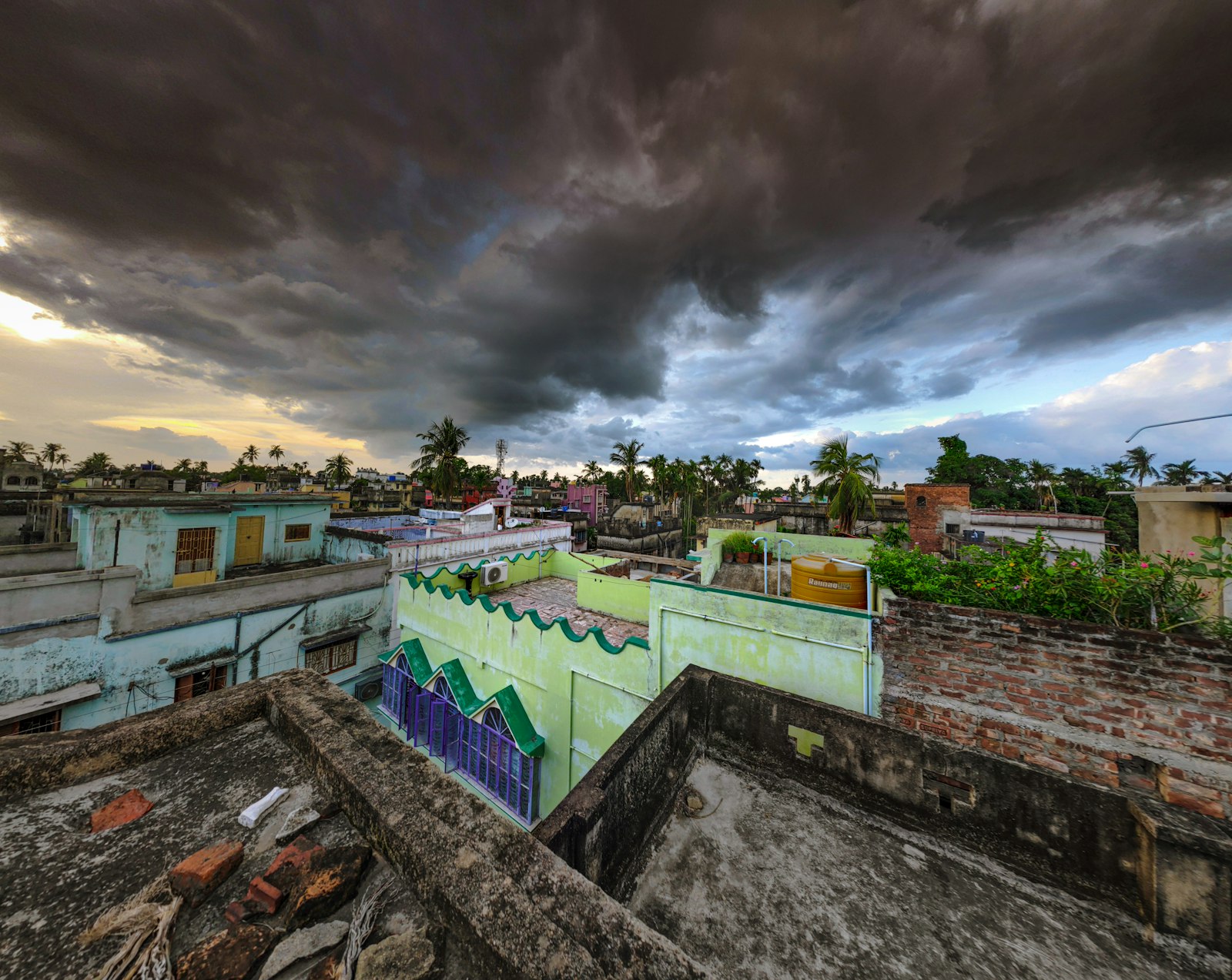
Delhi’s relationship with water has become one of contradiction. The National Capital sits on a river, receives a healthy monsoon each year, and pipes in supply from three neighbouring states — yet every summer brings tanker queues, dry borewells, and the same familiar political blame game. In 2026, the Delhi government has decided to stop postponing the problem and start capturing the one resource the city keeps letting run into its drains: rainfall.
At the centre of that shift is a new, dual-approach campaign designed to make every drop count — and, for the first time, to make rainwater harvesting a legal requirement rather than a good intention.
Delhi’s Water Crisis: The Numbers Behind the Alarm
Delhi’s water stress is not a matter of opinion; it is measured, documented, and worsening.
A City Living Beyond Its Water Means
The Central Ground Water Board (CGWB) classifies Delhi’s overall groundwater extraction as “critical,” with the city drawing down close to 99% of what nature manages to recharge — a rate that leaves almost no buffer for a weak monsoon or a drought year. Of Delhi’s 34 tehsils, around ten are formally rated “over-exploited,” eleven “critical,” and only a handful genuinely “safe.” Across large parts of the capital, private borewells have quietly become a parallel water system, pushing water tables deeper year after year.
The city’s natural sponges are disappearing too. Studies have found that South Delhi lost close to 97% of its wetlands over three decades, while more than three-quarters of the Yamuna floodplain has been encroached upon — stripping the city of the very surfaces that once let rainwater soak back into the ground.
Why Delhi Can’t Simply Pipe Its Way Out
Here is the uncomfortable part: more than 90% of Delhi’s roughly 1,000 million gallons per day (MGD) of supply is imported from outside the territory — the Yamuna, Ganga, and Bhakra sources together carry most of the load. That dependence leaves Delhi exposed to interstate disputes, upstream pollution spikes, and monsoon failures far beyond its control. Even a perfectly managed household cannot fix a canal dispute two states away.
That is exactly why local rainwater harvesting matters so much here. Experts estimate that during a single heavy 100mm downpour, effective rainwater harvesting across the city could capture in the order of 17,600 million gallons — roughly two weeks of Delhi’s entire water demand — much of which currently just drains away. Rainwater harvesting in Delhi is no longer an environmental nicety; it is a genuine resilience strategy.
“Catch the Rain 2026”: Delhi’s Boldest Water Policy Yet
Launched in 2026 by Chief Minister Rekha Gupta — complete with a dedicated water-conservation mascot named “Neera” — the “Catch the Rain 2026” campaign turns rooftops across the capital into active water-catchment zones. It builds on the national call to “catch the rain, where it falls, when it falls,” and is fronted operationally by Water Minister Parvesh Verma alongside the Delhi Jal Board.
The campaign uses a classic “carrot and stick” design to drive fast, city-wide adoption.
What the Campaign Mandates
Rainwater harvesting systems are now mandatory for all buildings measuring 100 square metres or more. This covers a huge share of independent homes, group housing societies, institutional campuses, and commercial plots across areas like Dwarka, Rohini, Vasant Kunj, Greater Kailash, Chhatarpur, and Mehrauli. Government buildings, parks, and public colonies have been given time-bound targets to lead by example ahead of the monsoon.
The Incentives: Rebates and Financial Assistance
To soften the cost and reward compliance, the government is offering:
- Up to a 10% rebate on your water bill where a functional rainwater harvesting system is in place.
- Financial assistance of up to ₹50,000 toward installation, depending on plot size, along with technical guidance from the Delhi Jal Board.
The Penalties: The “Stick” Behind the Policy
The incentives come paired with real consequences. Non-compliant properties can face a penalty of up to 50% of their total water bill, and new water connections are being issued only against a certificate confirming a working RWH structure. Officials have also signalled a move away from “rule on paper, no checking on the ground” — with a self-disclosure and verification mechanism under which property owners annually certify their systems are operational. Rebates can be withdrawn if a system falls into disrepair. In short: installing once and forgetting is no longer enough.
The Delhi Jal Board’s Central Role
The rollout is being spearheaded by the Delhi Jal Board (DJB), which is acting as the central hub for residents and building owners. The DJB facilitates the installation assistance, disburses the financial support, provides technical guidance, and monitors whether systems actually function. By sharing part of the upfront cost and offering long-term bill rebates, the DJB is removing the two barriers that usually stall green infrastructure at the residential level: money and complexity. For any Delhi property owner over the 100 sq m threshold, the DJB is the first point of contact.
Why Rainwater Harvesting Is Delhi’s Real Resilience Strategy
Because so much of Delhi’s supply is imported, household-level harvesting does something municipal pipelines cannot — it builds a local buffer that survives interstate disputes and Yamuna pollution events. Every rooftop that recharges groundwater instead of overloading a storm drain slows the aquifer decline that has forced borewells from 100 feet down to 600–1,000 feet in many neighbourhoods. Multiply that across thousands of buildings and the city starts refilling the savings account it has been overdrawing for decades.
But — and this is the part most homeowners miss — a rainwater harvesting system is only as good as the water it lets into the ground.
Not All Rainwater Harvesting Systems Are Equal — Why Filtration Matters
A recharge pit that takes in unfiltered rooftop runoff also takes in leaves, grit, bird droppings, and roof debris. Over time that silt clogs the pit, chokes the aquifer interface, and contaminates the very groundwater you are trying to protect. This is where the quality of the filter decides whether your system works for years or fails in one monsoon.
The WISY Filtering Principle
RPV Wisy is the authorised Indian distributor of WISY Germany rainwater harvesting filters, built around the patented WISY Filtering Principle — a self-cleaning design where clean water is drawn off by adhesion through a fine stainless-steel mesh while leaves and debris are carried away with the overflow. There are no moving parts to jam and nothing to switch on: it simply works, monsoon after monsoon, with minimal maintenance. That reliability is exactly what a mandatory, verification-based scheme like Catch the Rain 2026 rewards.
WISY Filters for Every Delhi Building
Whether you own a 100 sq m independent home in Rohini or manage a large group-housing society in Dwarka, there is a correctly-sized WISY filter for your rooftop catchment area:
- WFF 100 — compact vortex fine filter ideal for smaller independent homes just crossing the 100 sq m mandate.
- WFF 150 — for mid-sized homes and small commercial roofs needing higher throughput.
- WFF 300 — engineered for large roofs, institutional campuses, and group housing societies.
- Downpipe Filter — a neat, wall-mounted option that fits directly into existing rainwater downpipes with minimal plumbing changes.
- Inlet, Suction and Multisiphon components — the complete WISY system for clean storage and controlled groundwater recharge.
Matching the right filter to your roof area is the difference between a system that quietly earns your 10% rebate and one that clogs before it pays for itself.
Turning a Mandate Into an Opportunity
If you own a property in Delhi at or above the 100 square metre threshold, the clock is ticking. Reaching out to the Delhi Jal Board to claim your installation assistance is no longer just a smart financial move — it is now a civic duty. And with the right German-engineered filtration behind it, your system does more than tick a compliance box: it protects your water security for decades.
RPV Wisy can help you choose, size, and source the right WISY filter for your Delhi property. 📞 Call us: +91 81223 00301 ✉️ Email: info@rpvwisy.com
Frequently Asked Questions
Yes. Under the “Catch the Rain 2026” campaign, rainwater harvesting systems are mandatory for all buildings measuring 100 square metres or more. New water connections are also issued only against a certificate confirming a functional rainwater harvesting structure.
The Delhi Jal Board provides financial assistance of up to ₹50,000 toward installation (depending on plot size), plus up to a 10% rebate on your water bill where a functional system is in place, along with technical guidance.
Non-compliant properties can face a penalty of up to 50% of their total water bill, and may be unable to obtain new water connections. Rebates can also be withdrawn if an installed system is not maintained.
Any building with an area of 100 square metres or more — including independent homes, group housing societies, institutional campuses, and commercial plots. Government buildings and public spaces have been given time-bound targets to comply first.
Unfiltered rooftop runoff carries leaves, silt, and debris that clog recharge pits and contaminate groundwater. The self-cleaning WISY Filtering Principle removes debris automatically with no moving parts, keeping the system functional year after year — which is essential for a scheme that verifies whether systems actually work.
Also Read
Explore the rest of our India water-crisis and rainwater harvesting series:

Leave A Comment