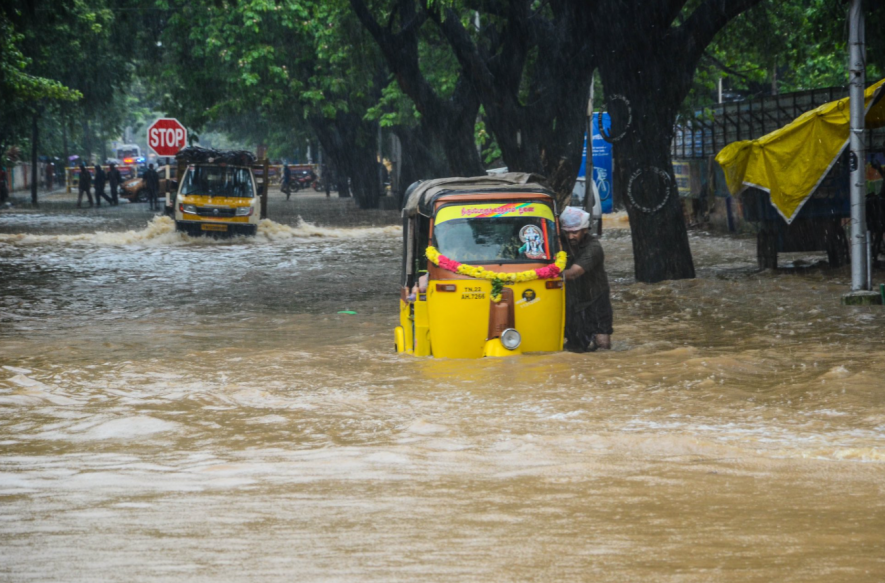
Heavy showers hit Chennai on Friday evening, October 16, 2026. By Saturday morning, water stood in low-lying areas again. For many residents, rainwater harvesting in Chennai suddenly looked less like an upgrade and more like basic infrastructure. This post explains what happened, what a rooftop system can do, and how a WISY filter keeps water clean.
What Happened in Chennai on October 16–17
According to DT Next, Chennai recorded an average of 3.42 cm of rain in the 24 hours ending 6 am on Saturday, October 17. The showers began on Friday evening. As a result, water stagnated in low-lying areas.
In addition, the Greater Chennai Corporation (GCC) reported heavy rain at seven locations, moderate rain at 41, and light rain at 14. Meanwhile, teams cleared silt from catch pits and debris from stormwater drains. One team worked on Besant Road in Teynampet, a spot that floods again and again.
NewsJ, a Tamil news channel, also covered the rainwater stagnation in a video report on the Chennai rain.
More Rain Is on the Way
The northeast monsoon has only just begun. India TV reports that the IMD issued an orange alert for six Tamil Nadu districts. It also forecast isolated heavy rain in Chennai and 25 other districts. Erode, where RPV Wisy is based, is among them.
Skymet expected the monsoon to set in around October 15, with an active week from October 14 to 21. Furthermore, the Regional Meteorological Centre has flagged a possible weather system near the Odisha coast late in October. According to News Today, it could bring more rain to coastal Tamil Nadu.
Why One Night of Rain Strains City Drains
First, rain that lands on a roof does not soak in. Instead, it runs into downpipes, then onto roads and into drains. Also, paved yards add to the flow. Silt and debris then cut how much water the drains can carry. That is why the GCC cleared catch pits during the rain.
Let us be clear about the limit. Rainwater harvesting in Chennai will not end citywide flooding on its own. Instead, drain design, desilting and lake restoration do that work. However, harvesting changes what leaves your own plot. If thousands of roofs hold back even part of their runoff, the drains face a lighter load.
What Rainwater Harvesting in Chennai Does for Your Property
A well-planned system for rainwater harvesting in Chennai does four jobs at once:
- Holds back runoff: a tank or recharge pit takes roof water before it reaches the street.
- Stores water: a full tank supports gardening, cleaning and toilet flushing in dry spells.
- Recharges groundwater: surplus water goes into the soil through a recharge pit or borewell.
- Cuts tanker dependence: stored rain reduces the water you buy.
How Much Water Can Your Roof Catch?
The maths is simple. One millimetre of rain on one square metre of roof gives about one litre of water, before losses. So take the 3.42 cm (34.2 mm) city average from this week’s rain. Here is what it means for different roof sizes:
| Roof area | Rain collected (theoretical) |
|---|---|
| 50 m² | 1,710 litres |
| 100 m² | 3,420 litres |
| 200 m² | 6,840 litres |
| 300 m² | 10,260 litres |
These figures are theoretical. Real yield is lower because of splash, evaporation and the first flush. Even so, one night of rain on a 100 m² roof could fill several 1,000-litre tanks.
Why Filtration Decides the Quality of Harvested Water
Catching rain is the easy part. However, keeping it clean is harder. For example, roof dust, leaves and bird droppings enter the tank with the first rain. Without a good filter, the stored water turns foul, and people abandon the system. Our look at why 52 school systems failed found clogged mesh and neglected first-flush diverters.
WISY filters tackle this with four design features:
- Automatic first flush. The filter diverts the dirtiest first water without any manual reset. Read more in our guide to first flush in rooftop systems.
- Self-cleaning vortex filtration. Water flows over a fine stainless steel mesh. Debris slides past into the drain, so the mesh does not clog easily. See the WISY filtering principle.
- Oxygen enrichment. The inflow enriches the water with oxygen. This helps keep stored water fresher for longer.
- German engineering. WISY Germany has worked in rainwater harvesting since 1989. RPV Wisy, its Indian wing, has supplied systems since 2008.
What can you do with the filtered water? Use it for toilets, laundry, gardening and cleaning. Then, after a final disinfection step, it becomes potable-ready. It is not raw drinking water, so never drink it straight from the tank.
Which WISY Filter Suits Your Roof?
The right model depends on your roof area and where the water enters your system:
- Downpipe Filter: sits in the vertical downpipe, which suits homes and smaller buildings.
- WFF 100/150: underground filters for larger roofs. One WFF 150 unit covers up to about 4,500 sq ft of roof.
- WFF 300: built for larger catchments such as apartments, campuses and factories.
- Inlet, Suction & Multisiphon: tank accessories that keep stored water calm and clean.
Five Steps to Start Rainwater Harvesting in Chennai
- Measure your roof. Length times width, in metres, gives your catchment area.
- Trace the downpipes. Note where each one drains today.
- Decide on storage. Choose a tank, a recharge pit, or both.
- Fit a filter. Place it at the downpipe or the tank inlet, based on your roof size.
- Check it before every monsoon. Clear leaves from the roof and gutters.
The northeast monsoon runs from October to December. So rainwater harvesting in Chennai can still catch part of this season’s rain if you fit a system now.
Frequently Asked Questions
Does rainwater harvesting in Chennai stop flooding?
No. Citywide flooding needs better drainage, desilting and lake care. However, a system on your roof reduces the water your plot sends to the street.
Can I drink harvested rainwater?
Not straight from the tank. Filtered rainwater is potable-ready after a final disinfection step. Until then, use it for toilets, laundry, gardening and cleaning.
Does harvesting work during the northeast monsoon?
Yes. Frequent rain is when systems fill fastest. A filter with automatic first flush also keeps the dirtiest water out of the tank.
Start Rainwater Harvesting in Chennai Before the Next Downpour
Every heavy night shows the same thing: rain is a resource until it leaves your roof unused. A WISY system lets you hold it, clean it and use it. Ready to start rainwater harvesting in Chennai? Book a site assessment on WhatsApp (+91 81223 00301) or contact our team. We will help you choose the right filter.
Sources: DT Next, India TV News, News Today, Skymet Weather, NewsJ on YouTube.
Leave A Comment