Updated 9 November 2026 · 6 min read
In 1995, a professor in Chennai turned on his tap and tasted salt. That moment started a movement that eventually became state law. Today, Hyderabad is facing its own water squeeze, and Chennai’s story of rainwater harvesting has never been more useful.
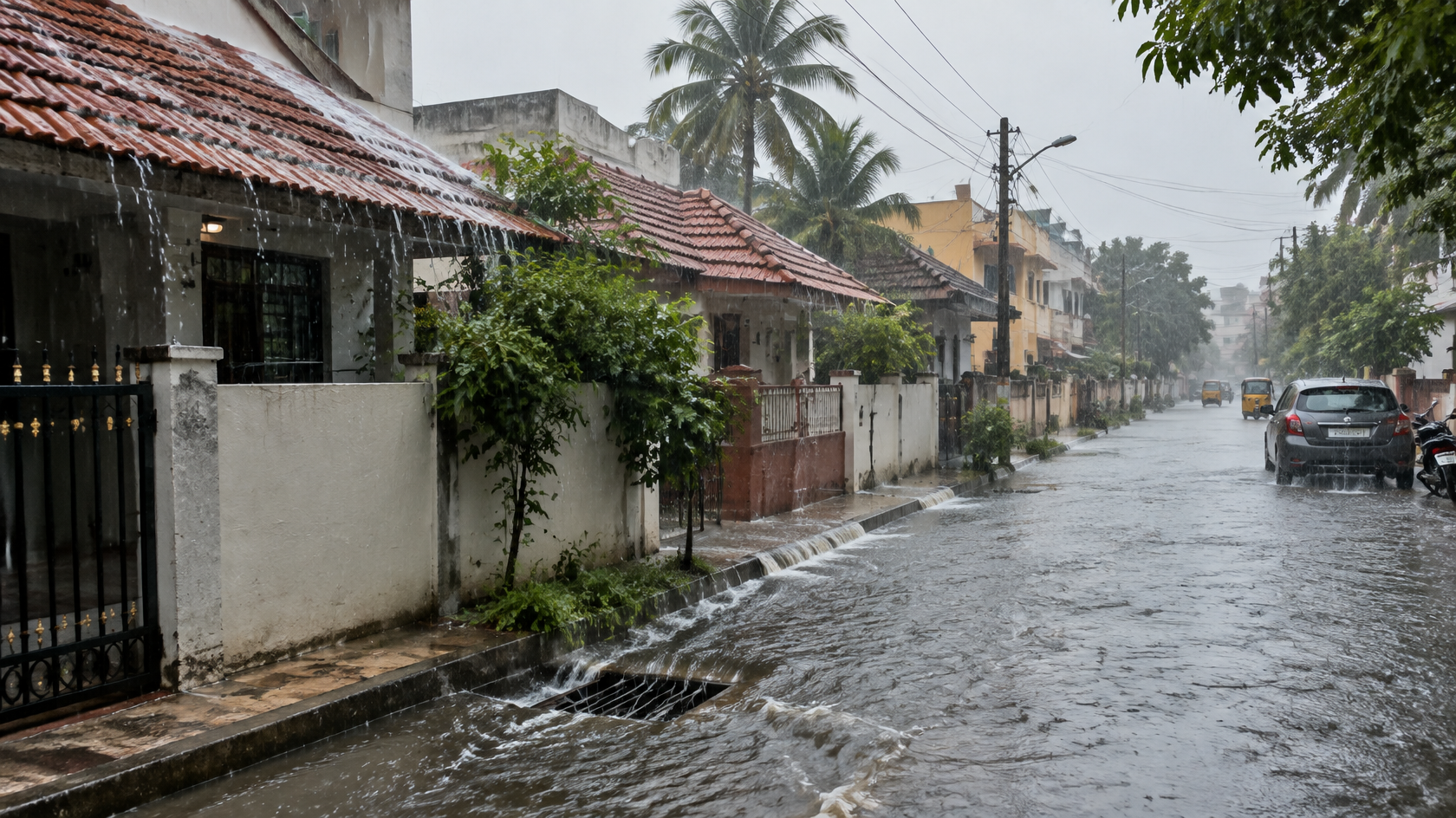
Illustrative image: monsoon rain on a Chennai street. Most of this water is lost to drains instead of recharging groundwater.
Key Takeaways
- Chennai’s problem was never too little rain. It was too little rain staying in the ground.
- Tamil Nadu made rainwater harvesting compulsory in 2002–2003, a rule that grew out of grassroots work.
- Many early systems were installed badly or never maintained, so results faded.
- Hyderabad needs shared responsibility: households, communities and civic bodies together.
Why Did Chennai’s Tap Water Turn Salty?
Chennai gets plenty of rain. The trouble is where it goes. Most of it ran off roads and into drains, then out to the sea.
Meanwhile, people kept pumping groundwater. As water levels dropped, seawater crept into the freshwater beneath the city. That is what Professor Sekhar Raghavan tasted in his tap in 1995.
His question was simple: if the rain is falling here, why are we not saving it?
How One Bicycle Started a Water Movement
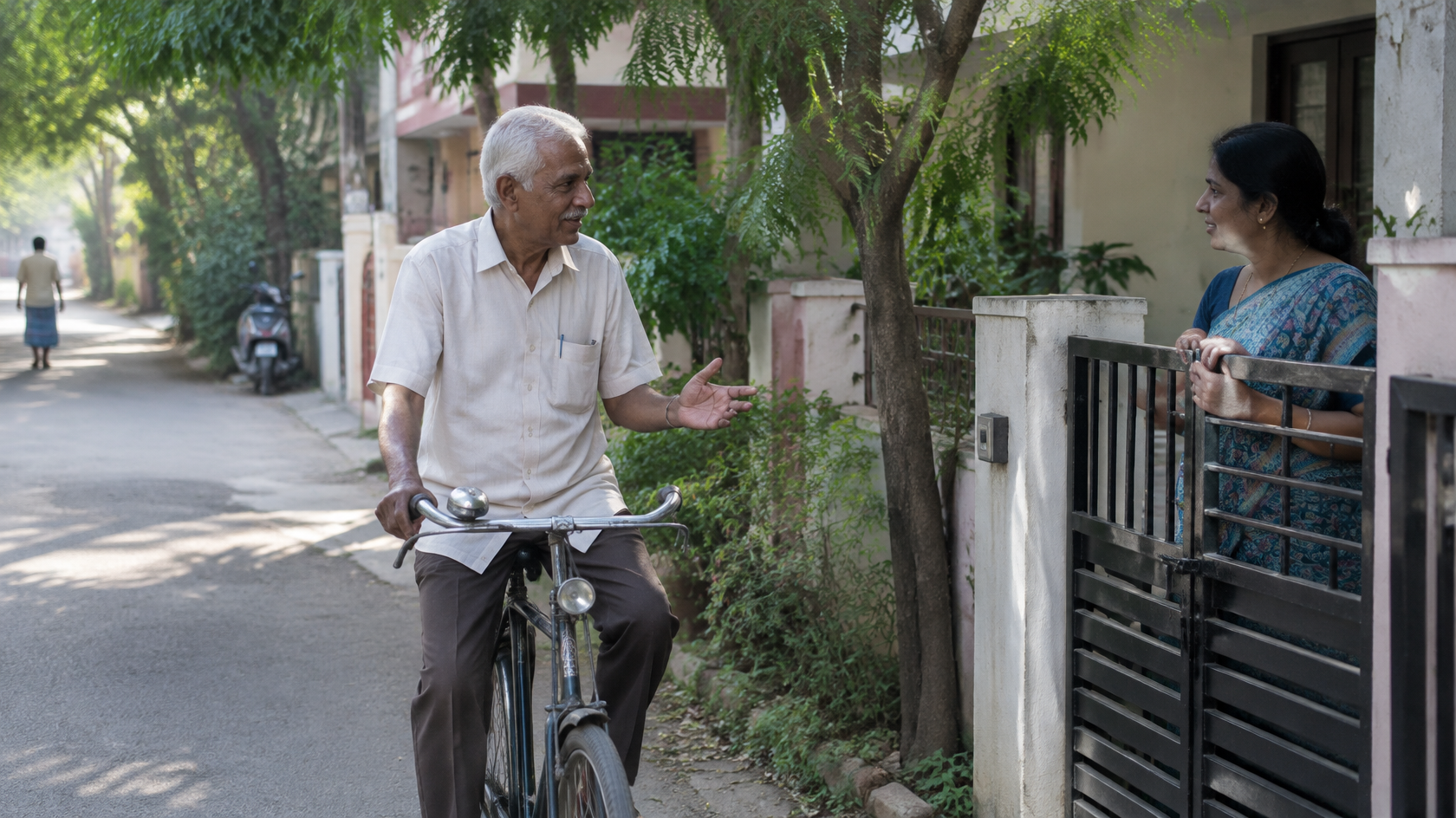
Illustrative image: door-to-door awareness was where Chennai’s rainwater harvesting story began.
Raghavan did not wait for a policy. He got on his bicycle and went door to door, explaining how rooftop rain can be filtered and sent back into the soil to refill aquifers.
Many people brushed off the idea at first. Rainwater harvesting was unfamiliar to most city households then. Explaining the science was the easy part. Winning trust was harder.
So he worked with communities, and through the Rain Centre he partnered with plumbers and well-diggers. The team surveyed systems across the city and set up model houses so people could see how it worked.
From Grassroots Idea to State Law
Public awareness gave the government something to build on. The key dates are simple:
- October 2002: Tamil Nadu passed legislation making rainwater harvesting compulsory.
- June 2003: An ordinance extended the rule to all existing buildings, including those in Chennai.
- 11 October 2003: The deadline for owners to install systems. Penalties included fines or disconnection of government water supply.
- November 2003: The government reported that 99.5% of Chennai’s houses and apartment complexes had adopted rainwater harvesting.
It sounded like a complete success. But a system on paper is not the same as a system that works.
Where Chennai Fell Short
1. Poor installation
A Rain Centre survey of one residential colony in late 2003 found that about half the residents had set up their systems unsatisfactorily.
2. Ignoring ground-level rain
Even good installations often captured only the roof. But rain also falls on driveways, courtyards and open ground. In apartment complexes, this surface runoff can be twice the rooftop volume or more.
This water is not suitable for direct household use. It can still go into recharge structures, where the soil filters it naturally as it seeps down.
3. Wasted public runoff
Roads, parks and playgrounds get a lot of rain too, yet much of it flows through stormwater drains into the Bay of Bengal. Directing suitable runoff into recharge structures could help, but it needs careful design. Road water carries silt, litter and other contaminants that can clog systems. Filtration, waste removal and regular cleaning are essential.
4. Neglect over time
The payoff was real. After the heavier 2005 rains, the Rain Centre recorded groundwater rising by around 20 feet in the areas it monitored. For about 15 years, harvesting helped strengthen Chennai’s reserves.
Then came the 2019 water crisis. It showed the weak point: clogged filters, neglected recharge pits and poorly working systems. Today Chennai is exploring sponge parks and underground rainwater capture to do better.
Hyderabad’s Water Crisis: Why This Story Matters Now
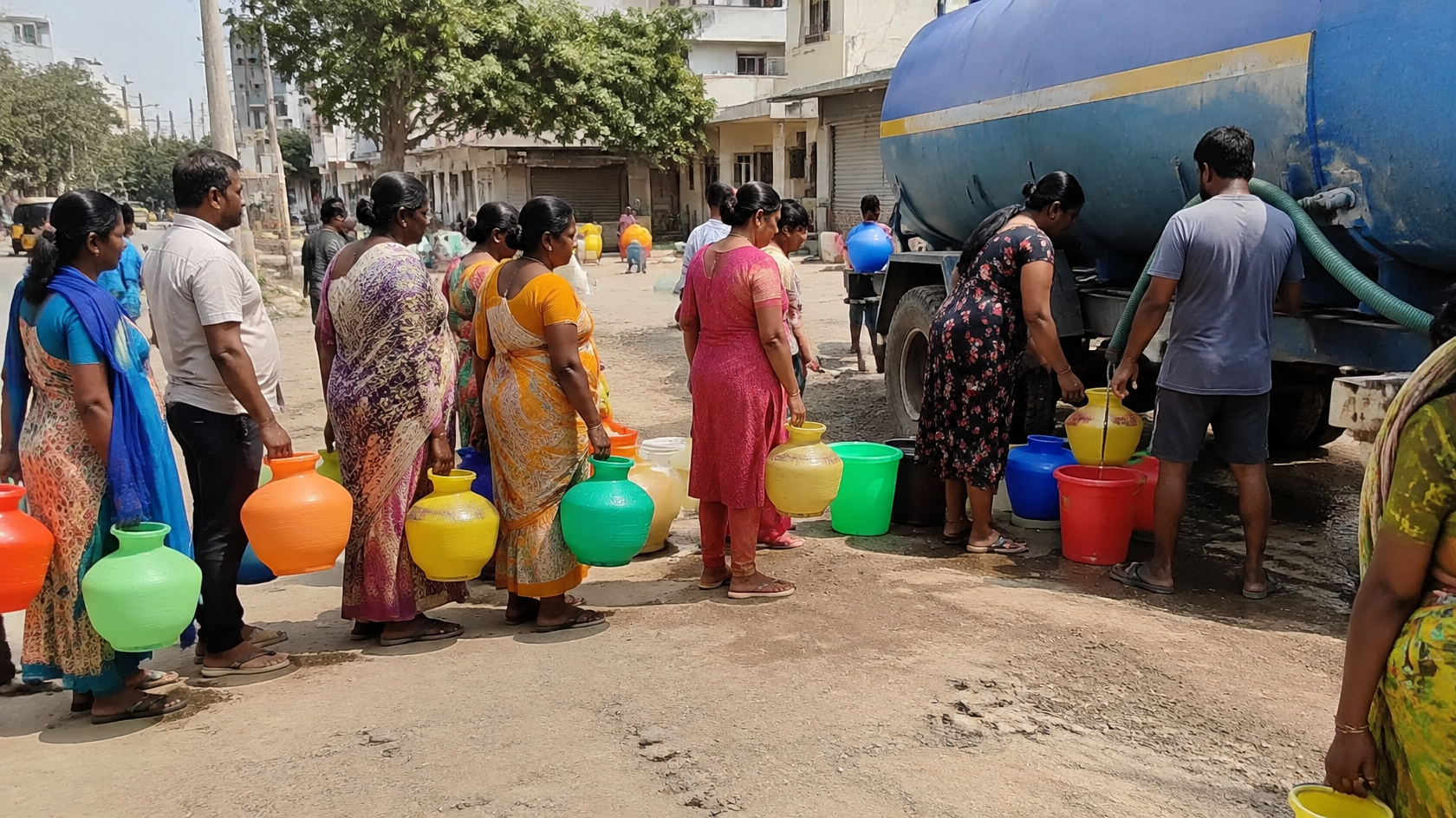
Illustrative image: tanker queues are a growing sight in water-stressed Indian cities.
Hyderabad has around 1.5 crore people, and the pressure is showing:
- More than 330 of Telangana’s 600-plus mandals are classed as drought-hit, per state irrigation department data.
- Only about 500 of the state’s 6,000-plus lakes hold water.
- Daily tanker bookings have reportedly reached 6,000 to 8,000.
- Some areas on the outskirts report supply only once every three to four days, and one major reservoir has reportedly dropped to around 13% of capacity.
The shortage is not only about how much water a city receives. It is also about how much the city can hold on to.
What Hyderabad (and Every Indian City) Can Learn
The lesson is not to copy Chennai’s law word for word. It is to build a system that lasts:
- Do it properly the first time. Correct filtering, correct pit sizing and correct pipework.
- Capture the whole site. Roof plus the paved and open areas around it.
- Maintain every year. Clean filters and pits before each monsoon.
- Share responsibility. Households, communities and civic authorities all have a role.
How a Good Rooftop Rainwater Harvesting System Works
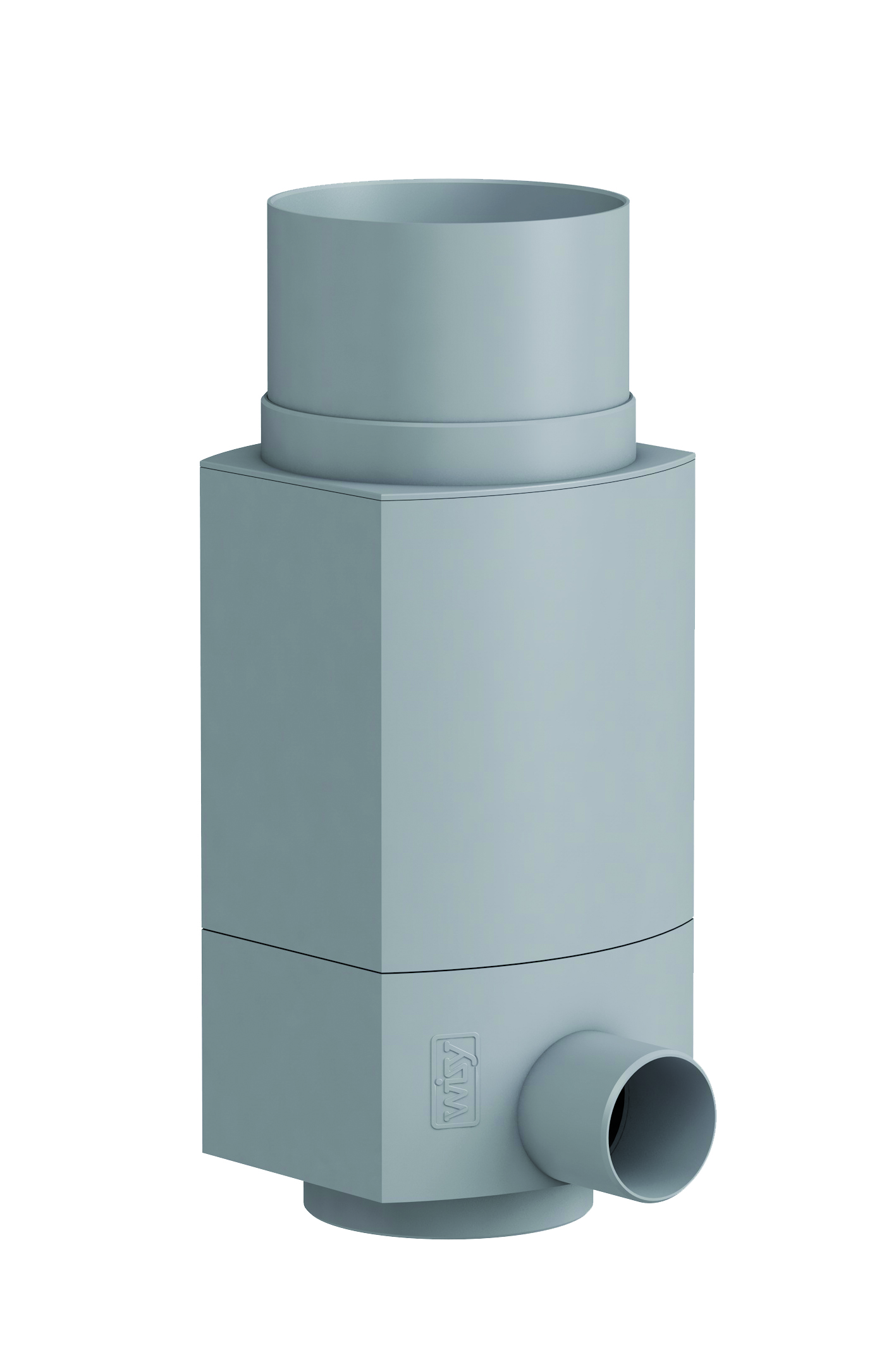
The WISY RegenSammler RS downpipe filter (grey) fits into the rooftop downpipe.
A simple rooftop rainwater harvesting system has four steps:
- Catch: Rain falls on the roof and flows into downpipes.
- Filter: A filter removes leaves, silt and debris. Larger sites can use an underground option such as the WFF 150, which handles roof areas up to 4,500 sq ft.
- Divert the first flush: The first, dirtiest water is discarded, using parts like the inlet, suction and multisiphon range.
- Recharge or store: Clean water goes into a recharge pit or borewell, or into a tank.
Filtering is where most systems fail. WISY filtration systems, German-engineered and distributed across India by RPV WISY, are built for exactly this. See how the WISY filtering principle works, or explore the downpipe filter for home rooftops. Here is what sets them apart:
- Automatic first flushing sends the dirtiest water away first.
- Self-cleaning vortex filtration keeps mesh clear without manual scrubbing.
- Oxygen enrichment through free aeration improves stored water quality.
- German engineering for long, low-maintenance service life.
Filtered rainwater is potable-ready after a final disinfection step such as UV or chlorination. It should never be treated as raw drinking water.
Frequently Asked Questions
Is rainwater harvesting mandatory in Tamil Nadu?
Yes. Legislation in October 2002 made it compulsory, and a June 2003 ordinance extended it to all existing buildings.
Why do rainwater harvesting systems fail over time?
Mostly from poor maintenance: clogged filters, silted pits and neglected pipes. Clean them before every monsoon.
Is harvested rainwater safe to drink?
Only after filtration and a final disinfection step. Treat it as potable-ready, not raw drinking water.
Can I harvest more than my rooftop rain?
Yes. Rain on paved and open areas can be filtered and sent to recharge structures. Do not use this water for drinking.
Ready to Make Your Property Drought-Ready?
Whether you own a home, an apartment community or a factory, a properly designed system pays off every monsoon. Tell us your roof area and location, and we will suggest the right filter and recharge setup. You can also browse all RPV WISY products, find an authorized dealer near you, or use our contact page to request a quote.
Get a Free Consultation on WhatsApp
Looking for more guides? Read more on the RPV WISY blog.
Source and credit: This article is an original explainer inspired by reporting from The Better India (5 November 2026). Figures on Hyderabad’s water situation are as reported there and should be checked against official updates.
Leave A Comment