
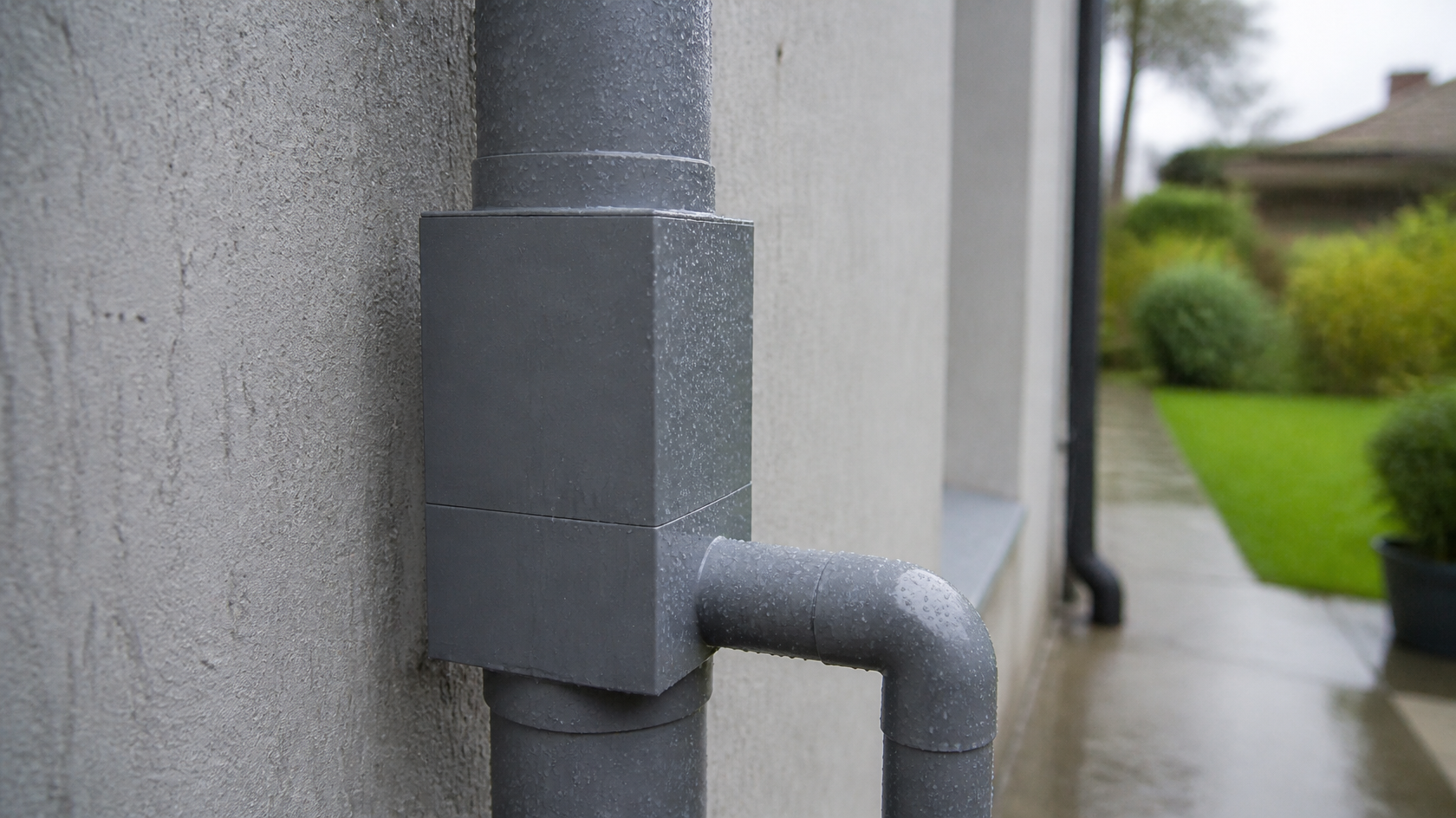
Every rainwater harvesting system has one weak point: the filter. If it clogs, the pit stops recharging, the tank fills with silt, and someone has to climb up and clean it. That is why a self-cleaning rainwater harvesting filter is one of the best upgrades you can make to a home or commercial system.
In this article, we explain what self-cleaning really means. We also show how the WISY filter does it without power, moving parts or consumables, and how efficient it is in practice.
Why ordinary rainwater filters clog
Most basic filters work like a sieve: water passes through a mesh, cloth or cartridge, and the dirt stays behind on the surface. That sounds fine until the first monsoon storm washes leaves, dust, bird droppings and insects off the roof. Then the trapped dirt builds up, the mesh blocks, and the water has nowhere to go but over the top or into the overflow.
Filters that hold on to dirt, such as sand and gravel beds, mat filters and fabric filters, need frequent cleaning to keep working. Besides, the quality of the water they deliver drops as they clog. In short, a person has to clean any filter that holds on to dirt.
What is a self-cleaning rainwater filter?
A self-cleaning filter does the opposite. Its design keeps the dirt from staying on the mesh. The same flow of water that brings the debris in also carries it out, so the filter clears itself every time it rains. As a result, you need no power, no backwash cycle and no replacement cartridge.
How the WISY filter cleans itself
German-engineered WISY filters use a simple principle based on the way water behaves on a smooth surface.
How the filter works, step by step
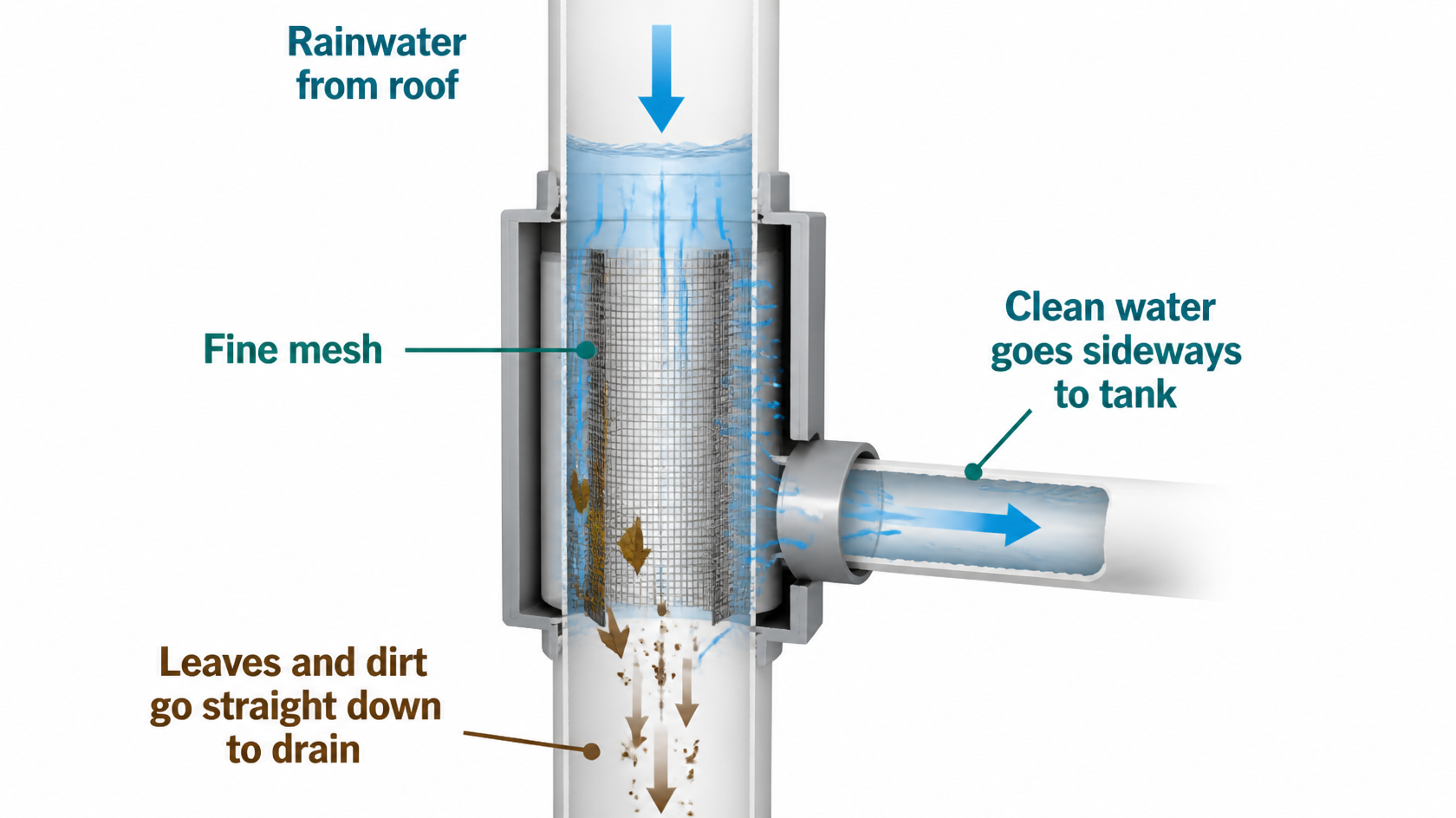
- The mesh stands vertical. The filter insert is a fine stainless steel mesh that stands upright instead of lying flat. Therefore, debris has nothing to settle on.
- Adhesion pulls the clean water through. Adhesion forces draw the rainwater coming down the downpipe sideways through the vertical mesh. Adhesion is the natural tendency of water to cling to a smooth surface. The fine-filter models use a stainless steel mesh of 0.28 mm.
- Debris slides straight past. Leaves, moss, insects and grit stay on the outside of the mesh. The rest of the flow then carries them straight down the pipe and out to the drain or soakaway, so they never build up.
- The first dirty flow is handled automatically. At the start of a shower, most of the water runs straight past the mesh and carries the dirt from the roof with it. Only when water has fully wetted the mesh does the filter reach its full pulling force. After that, clean water passes through to the pit or tank. This is the automatic first-flush action, so you do not need to operate any valve or switch.
- The water is oxygenated on the way. Also, the movement of water over the large mesh surface enriches it with oxygen. This helps stored water stay fresh and reduces the stale smell of stagnant water.
Why the downpipe stays open
No narrowing, no blocking: your downpipe stays fully open.
The WISY filter does not narrow or block the downpipe. Heavy rain, and even hail, keeps flowing down the pipe, so water never backs up onto the roof or overflows at the gutter. This matters most in a cloudburst, which is exactly when many filters that sit in the flow or reduce the pipe’s cross-section choke up.
How efficient is the WISY filter?
WISY states that its vertical fine filter harvests more than 90% of the rainwater while it automatically separates dirt and debris. Suppliers of the downpipe filters are a little more specific: once water has thoroughly wetted the mesh, about 95% of the rainwater passes through into the tank. Likewise, the manufacturer’s data gives a filtration rate of over 90% for the larger underground vortex filters.
However, two points are worth understanding about these numbers:
- Efficiency needs a wet mesh. The filter reaches its full pulling force only after water completely saturates the mesh. For this reason, the first moments of a shower run past, which is exactly what keeps the dirtiest water out.
- It is a hydraulic efficiency. In other words, it describes how much of the roof runoff ends up as filtered water, while the rest carries the debris away. Also, real-world figures vary with rain intensity, the roof area connected to the filter, and installation.
WISY self-cleaning filter vs ordinary mesh filter
| Ordinary mesh or cartridge filter | WISY self-cleaning filter | |
|---|---|---|
| Mesh position | Flat or horizontal, dirt settles on it | Vertical, dirt slides past |
| Cleaning | Manual, often several times a season | Cleans itself with the flow of rainwater |
| Downpipe in heavy rain | Can be narrowed or obstructed by the filter in some designs, water may back up | Stays fully open, no narrowing or blocking, even in hail |
| Clogging in heavy rain | Common | Very unlikely |
| Consumables | Cartridges or cloth to replace | None, stainless steel mesh |
| Power | Sometimes needed | None |
| Water freshness | No effect | Water gains oxygen |
What “no maintenance” means in practice
A WISY filter needs no regular maintenance because the mesh cleans itself, and there are no cartridges, filter media or electrical parts to replace. However, if you ever notice debris on the mesh, for example after a storm drops a lot of leaves, simply rinse it or brush it gently with a soft brush.
The only part of the system that needs attention is the recharge pit, which needs de-silting and basic upkeep. For this, budget about ₹1,000 to ₹2,000 a year.
Where is the filter installed?
- Downpipe filter: sits directly on the vertical downpipe on the wall. It is the quickest option for homes and for retrofits, and the clean water goes out through a side outlet to the pit or tank. Remember that the pipe you connect to this outlet must have the same diameter as the outlet.
- Underground vortex fine filter: sits in the pipe below ground and stays completely hidden. It is the better choice for larger roofs, commercial buildings and secure sites, because one filter can serve several downpipes.
Tips to get the best efficiency
- Do not overload the filter. Match each filter to the roof area it can handle. For example, larger roofs need more than one unit or a larger filter.
- Keep the downpipe straight and plumb so water flows evenly over the full mesh surface.
- Match the pipe sizes at the inlet and outlet. Otherwise, mismatched diameters slow the flow and cause leaks.
- Keep the gutters and roof reasonably clean before the monsoon. The filter handles debris, but a clean roof means less dirt to flush.
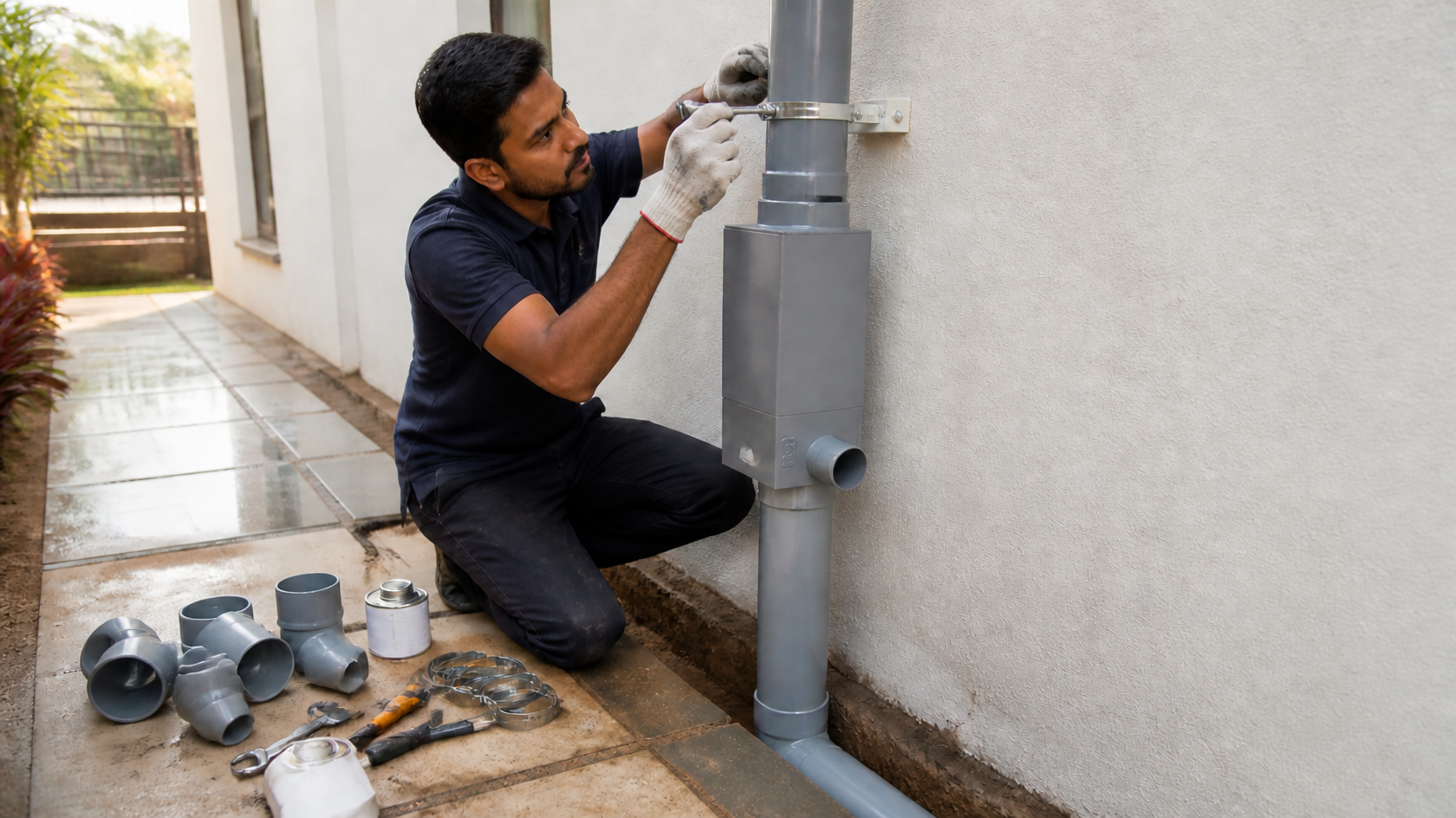
- Ask a trained dealer to install it. The dealer will check the slope, the joints and the overflow before the first rain.
Frequently asked questions
What is a self-cleaning rainwater harvesting filter?
It is a filter whose design lets the flow of rainwater carry debris away from the mesh, so there is nothing to scrub, replace or back-wash.
How does the WISY filter clean itself?
The stainless steel mesh is vertical. Water clings to it and flows through to the side outlet, while leaves and debris slide straight down the pipe to the drain.
How efficient is the WISY filter?
The manufacturer states that the filter harvests more than 90% of the rainwater. The supplier figure for downpipe filters is about 95% once the mesh is wet. However, actual efficiency varies with rain intensity and installation.
Can the filter block the downpipe in heavy rain?
The WISY filter does not narrow or obstruct the downpipe, so heavy rain and even hail pass through without backing up onto the roof. The pipe simply carries any water the filter does not need on down to the drain.
Does the filter need electricity?
No. It works on gravity and the natural adhesion of water, so it needs no power at all.
Do I still need a first-flush device?
The filter separates the first dirty runoff automatically until the mesh is wet, so you do not need a separate valve or first-flush chamber on the downpipe.
What is the mesh size?
The fine-filter models use a stainless steel mesh of 0.28 mm (280 micron). Some garden-type filters use a coarser 0.44 mm mesh.
Talk to us about a self-cleaning filter for your roof
RPV WISY supplies WISY rainwater filters across India and installs them through a network of dealers. Just tell us your roof area and location, and we will then recommend the right filter and setup.
Get a free consultation on WhatsApp: +91 81223 00301
Leave A Comment