
Rainwater harvesting system cost for home is the first question most owners ask when planning a new house or retrofitting an existing one: how much will it really cost? The honest answer is that it depends on your roof area, whether you want to recharge groundwater, store water for use, or do both, and the quality of the filtration you choose.
This guide gives realistic price ranges for Indian homes, explains what drives the cost up or down, and shows how to work out whether the system pays for itself.
Quick answer: what does a home rainwater harvesting system cost?
Published market estimates for 2025–26 put a typical residential system in India anywhere from about ₹20,000 to ₹80,000 for a simple setup. Larger roofs with storage and a pump can run to ₹1.5 lakh or more. These are indicative market ranges, not a quotation. Your actual cost depends on site conditions.
| Home size | Typical roof area | Typical system | Indicative cost |
|---|---|---|---|
| Small (up to ~1,200 sq ft) | 60–90 m² | Filter + one recharge pit, optional small tank | ₹18,000 – ₹60,000 |
| Medium (~1,200–2,400 sq ft) | 90–160 m² | Filter + pit + 5,000–10,000 L storage + pump | ₹70,000 – ₹1.6 lakh |
| Large villa (2,400 sq ft+) | 160 m² and above | Multiple pits or recharge well + large sump | ₹1.5 lakh – ₹4 lakh+ |
Ranges are indicative, drawn from published Indian market guides. Final cost depends on site, soil, design and materials.
Cost breakdown: where does the money go?
1. Storage tank
The tank is usually the biggest single item if you choose storage. Plastic tanks work out to roughly ₹7–12 per litre of capacity, so a 5,000-litre tank can cost in the region of ₹35,000–60,000 before installation. Underground RCC or ferrocement sumps cost differently, based on excavation and civil work.
2. Filtration and first-flush
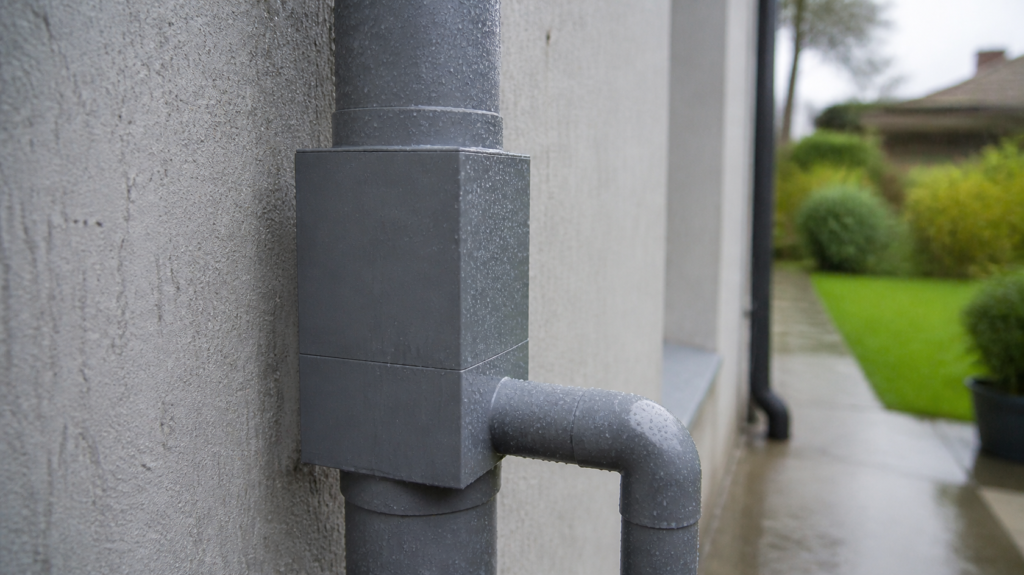
The filter is the part that decides how clean your harvested water is and how much maintenance you will do for the next ten years. A good filter removes leaves, dust and debris, and a first-flush arrangement diverts the dirtiest initial runoff. Cheap mesh screens clog quickly, while a self-cleaning filter keeps working with no maintenance. This is the one component where spending slightly more upfront usually saves money and effort later.
3. Recharge pit or recharge well
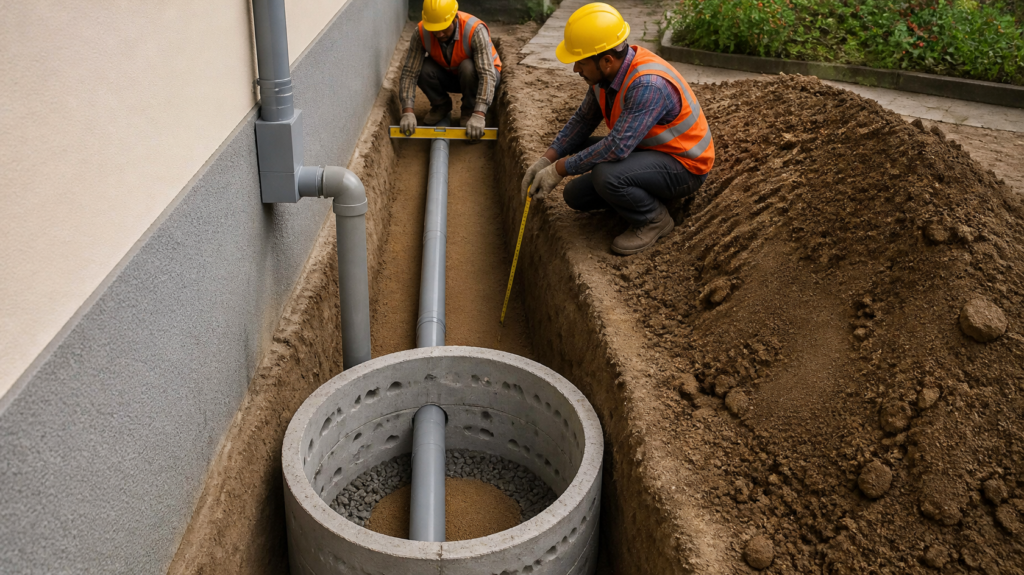
If your goal is to raise the groundwater level and keep your borewell or open well alive, a recharge structure is the core of the system. A standard recharge pit typically costs around ₹8,000–15,000, with larger or deeper structures costing more.
4. Pipes and conveyance
Connecting your downpipes to the filter, tank and pit adds piping cost. Conveyance pipework is commonly priced around ₹150–300 per metre depending on material and diameter, so a compact layout close to the downpipes keeps this line small.
5. Labour and installation
Digging, plumbing and fitting make up the installation charge. Market guides suggest roughly ₹8,000–15,000 for a small home and ₹20,000–50,000 for a larger one.
6. Pump and distribution (optional)
If you want to use stored rainwater for gardening, toilets, washing or other household needs, you will need a pump and a separate supply line. This adds to the budget, so decide early whether you want recharge only or reuse too.
Recharge vs storage: which is cheaper?
Recharge-only systems (filter + pit or borewell recharge) are the most affordable and need the least space. They are ideal if you already have a borewell or open well.
Storage systems cost more because of the tank and pump, but they give you water you can use directly during dry spells. Combined systems store what you need first and send the overflow to recharge, so no rain is wasted. For most Tamil Nadu homes with a borewell, a combined or recharge-first design gives the best value.
Is rainwater harvesting mandatory in Tamil Nadu?
Yes. Tamil Nadu was among the first states to make rainwater harvesting compulsory, through a 2003 ordinance amending the municipal laws for all buildings, public and private. Local rules have also tied water and sewer connections to having a harvesting structure in place. So for many homeowners the real question is not whether to build one, but how to build one that actually works, rather than a token pit that clogs in the first monsoon.
What affects your final cost?
- Roof (catchment) area: a bigger roof collects more water and needs larger filters, pipes and pits.
- Soil and groundwater conditions: sandy soil drains easily, while clayey soil may need a deeper or larger recharge structure.
- New build vs retrofit: planning the system before construction is cheaper than cutting and re-laying drainage later.
- Filter quality: a self-cleaning filter costs more upfront than a basic screen but needs no maintenance.
- Storage size: every extra 1,000 litres of tank adds a significant amount.
- Distance between downpipes, filter and pit: shorter runs mean less piping and labour.
Budgeting tip: add 10–15% on top of your estimate for extra fittings, piping or civil work that only shows up once digging starts.
How much water can your roof actually deliver?
A simple formula gives you a realistic target:
Water harvested (litres) = Roof area (m²) × Annual rainfall (mm) × 0.8
The 0.8 is a runoff coefficient for a concrete roof, allowing for losses from splash, evaporation and first flush.
Illustration (not a local forecast): a 1,200 sq ft roof is about 111 m². With 800 mm of annual rainfall, that is 111 × 800 × 0.8 ≈ 71,000 litres a year. Check your own location’s average rainfall to get your number.
Running costs and maintenance
Maintenance is minimal compared with the setup cost.
- Self-cleaning filter: no maintenance is needed. The filter cleans itself, so there is nothing to service or replace.
- Recharge pit: the only part that needs attention. It needs periodic de-silting and basic upkeep.
The yearly cost of this pit upkeep is about ₹1,000 to ₹2,000.
Does it pay for itself?
Payback comes from three places: less spending on tanker water, lower pumping and water-bill costs, and a borewell that holds water for more months of the year. To estimate your own payback:
- Work out litres harvested per year using the formula above.
- Multiply by what you currently pay per 1,000 litres (tanker or supply charge).
- Divide your system cost by that yearly saving.
Homes that rely on paid tanker water in summer typically see the quickest return. Homes with a recharge-only system benefit mainly through a healthier borewell, which is harder to put a rupee value on but matters most in a dry year.
How to keep your cost sensible without cutting corners
- Design it before you build. Include the system in the plumbing plan of a new home.
- Do not skip the filter. A clogged, unfiltered pit stops recharging within a season or two and the money is wasted.
- Size storage to your use, not to the biggest tank on offer.
- Choose low-maintenance parts. Self-cleaning, automatic first-flush filters need no maintenance.
- Get a site-specific quote. Roof layout and downpipe positions change the price more than most people expect.
Frequently asked questions
What is the average cost of a rainwater harvesting system for a house in India?
For a typical residential home, market guides quote roughly ₹20,000 to ₹80,000 for a standard system, with larger homes and storage-based designs costing more.
How much does a recharge pit cost?
A standard recharge pit is commonly priced around ₹8,000–15,000, depending on depth, size and soil conditions.
Can I add rainwater harvesting to an existing house?
Yes. Retrofits are very common. The cost is a little higher than a new build because existing downpipes and drains may need to be rerouted.
Does a rainwater harvesting system need a lot of maintenance?
No. A self-cleaning filter needs no maintenance. Only the recharge pit needs periodic de-silting and basic upkeep, costing about ₹1,000 to ₹2,000 a year.
Is a government subsidy available?
Schemes and rebates vary by state, city and year. Check with your local municipality or the Tamil Nadu Water Supply and Drainage Board for what applies to your area today.
Get an exact quote for your home
Every roof is different. Share your roof area, location and whether you want recharge, storage or both, and our team will suggest a system and a clear estimate, installed through our dealer network across India.
Leave A Comment