
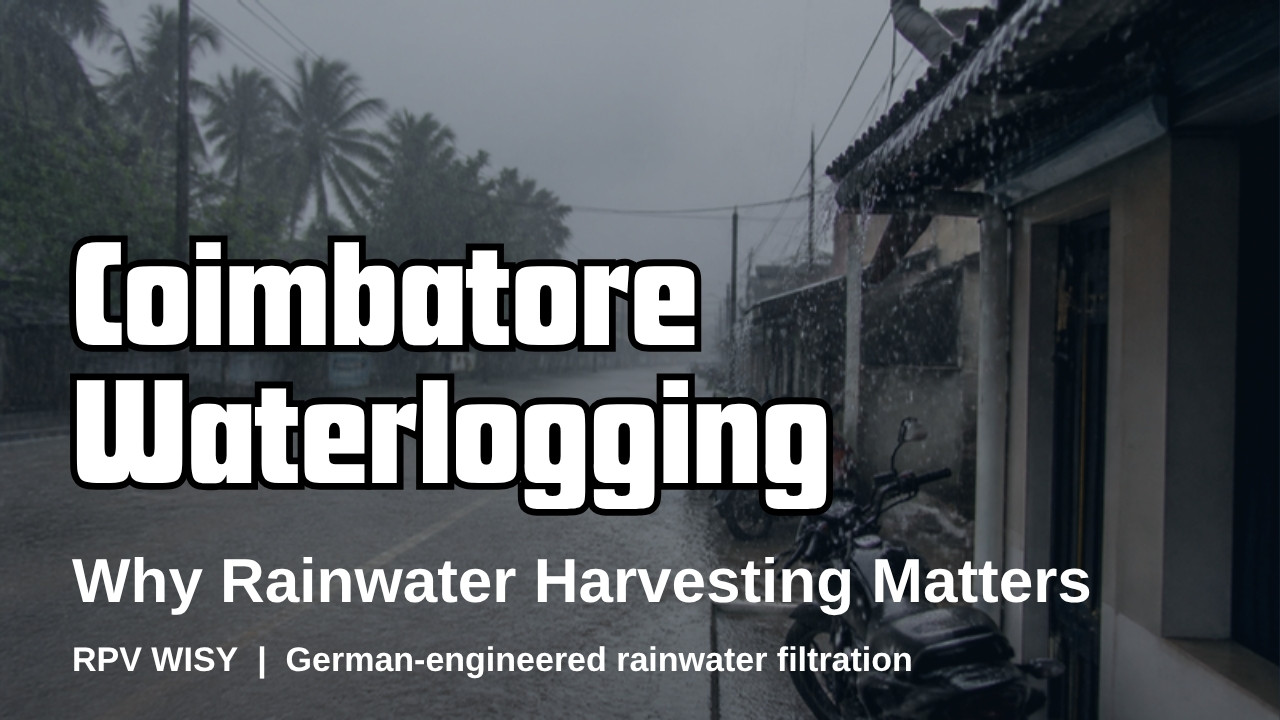
ainwater harvesting in Coimbatore is back in the conversation after Sunday, 25 October 2026, when persistent rain left parts of the city waterlogged and schools were shut on Monday. The northeast monsoon is only getting started, so the question for homeowners, apartment associations and institutions is a practical one: where does the water on your roof go?
What happened in Coimbatore this week
Local reports describe a heavy Sunday downpour that left streets waterlogged across the city. NewsBytes reported that the Corporation logged 130 calls about waterlogging and inundation, with the Town Hall area alone recording 98.2 mm of rain between 1 pm and 7 pm. About 150 patients at Coimbatore Medical College Hospital were moved to other wards after a ground-floor ward flooded, and crews pumped water out of 46 trouble spots.
Afternoon News adds that two trees fell in the city and two houses were partly damaged in Mettupalayam taluk, while the Minister and District Collector reviewed the situation at the Corporation’s command centre. District authorities declared a school holiday for Monday, 26 October.
Why roofs matter more than most people think
When a downpour hits a built-up area, rain that lands on roofs and paved surfaces cannot soak into the ground. It runs off, joins the street and loads the storm drains all at once. In a short, intense spell, that runoff is a big part of why roads turn into pools.
Rainwater harvesting changes what happens to the roof’s share of that water. Instead of leaving the plot, it is filtered and then either stored for use or sent to a recharge pit or borewell. To be clear, this will not stop a cloudburst or replace proper city drainage. What it does is reduce the load each building adds, and turn a monsoon problem into a water-security asset for the dry months.
Waterlogging today, water shortage in summer
Coimbatore’s rain comes in bursts, and most of it flows away within hours. A property with a harvesting system keeps part of that burst. The stored or recharged water then supports garden, cleaning, flushing and, after proper treatment, other household needs when borewells and supply lines are under pressure. That is the real argument for harvesting: the same rain that floods a road in October can reduce a tanker bill in April.
What a reliable rainwater harvesting system needs
A harvesting system is only as good as the filter at the front of it. Clogged filters and neglected pits are the most common reason systems stop working after a season or two. When we look at a site, we check four things that WISY filtration is built around:
- Auto-first flushing: the first, dirtiest runoff is diverted automatically, so leaves, dust and bird droppings do not enter the tank.
- Self-cleaning vortex filtration: debris is carried away by the flow instead of building up on the mesh, which keeps maintenance low.
- Oxygen enrichment: water entering storage is aerated for free, which helps keep stored water fresher.
- German engineering: WISY filters are engineered in Germany and have a long track record in rainwater systems worldwide.
For large roofs, the WISY WFF 150 underground filter handles up to 4,500 sq ft of roof area per unit and is a good fit for apartments, institutions and secure campuses. For smaller buildings, a WISY downpipe filter fits directly on the downpipe, and the right choice depends on your roof area and where the water will go. You can see the full range on the RPV WISY home page.
A note on safety: filtered rainwater from a WISY system is potable-ready after a final disinfection step. It should never be treated as raw drinking water.
Five questions to ask before the next spell of rain
- How many square feet of roof does your building have, and where do the downpipes discharge?
- Is there a filter on every downpipe that feeds a tank or recharge pit?
- Does the system flush the first runoff automatically?
- Is there a recharge pit or borewell connection for the overflow?
- Who inspects the filters and pits before and after the monsoon?
Frequently asked questions
Can rainwater harvesting prevent waterlogging in Coimbatore?
Not on its own. It will not stop a cloudburst or fix city drainage, but every roof that captures and recharges its own runoff sends less water into overloaded roads and drains.
Is harvested rainwater safe to drink?
Filtered rainwater from a WISY system is potable-ready.
How much roof area can one WISY WFF 150 underground filter handle?
One unit covers a roof area of up to 4,500 sq ft.
How do I get a rainwater harvesting system for my building in Coimbatore?
Send your roof area and location on WhatsApp and the team will suggest a suitable filtration and storage or recharge layout.
Plan your rainwater harvesting before the next downpour
The northeast monsoon has weeks to run. If you own or manage a house, apartment complex, school or factory in Coimbatore, Erode or anywhere in Tamil Nadu, now is the time to put a system in place or check the one you have.
Book a free consultation on WhatsApp: +91 81223 00301
Sources: NewsBytes, Afternoon News, Careerindia.

Leave A Comment