
Rainwater harvesting is not a new idea. A tank built about 400 years ago has just been rediscovered at Amer Fort in Jaipur. Conservation workers found it by chance. Moreover, its design carries a lesson for every modern home and factory: filter the water first, then store it.
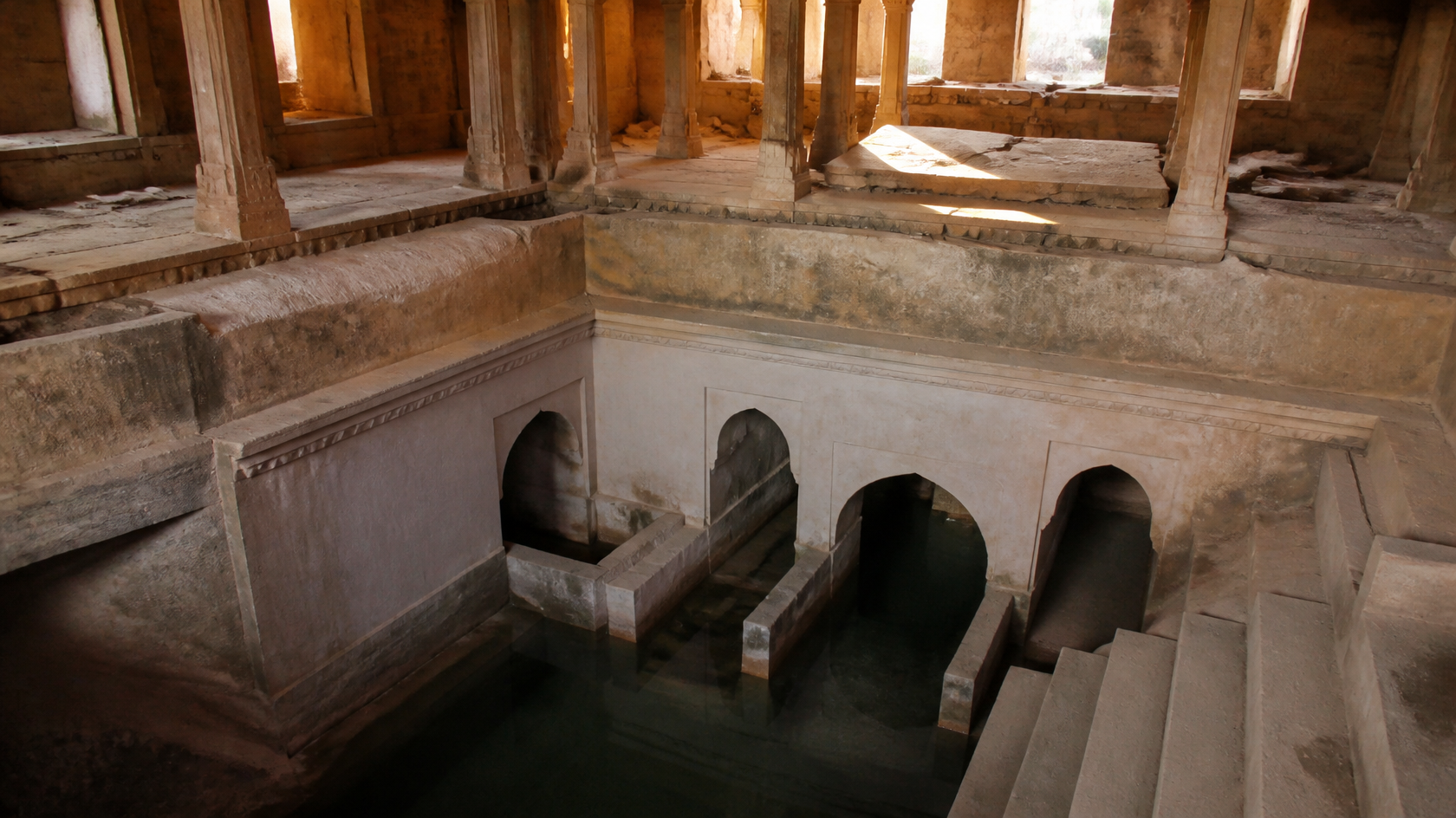
What was found at Amer Fort?
According to The Hans India, the underground tank came to light during conservation work. First, it lies beneath a baradari (an open pavilion) in the Man Singh Palace. Second, officials date it to the reign of Maharaja Man Singh I, between 1589 and 1614.
Amer Fort Superintendent Dr Rakesh Chholak said workers revealed it when they removed stone slabs from a pathway in the eastern part of the pavilion. Later, after renovation by the archaeology department, the tank will open to tourists.
How did this old rainwater harvesting system work?
In fact, the reported details show a design that modern engineers would recognise at once:
- Catchment: rainwater from roofs, corridors and courtyards flowed into the underground tank.
- Filtration: specially designed chambers separated silt and debris before the water reached storage.
- Maintenance outlets: separate outlets allowed cleaning and let excess water leave.
In short, the builders planned catchment, filtering, storage, overflow and cleaning in one system. They had to, because a fort cannot afford a tank full of mud or stagnant water.
Amer Fort has a long water-saving history
However, this is not the first time Amer’s water engineering has impressed visitors. The Rajput builders combined Maota Lake, a series of tanks, a Persian wheel (rehat) and lime-coated underground storage. In addition, UNESCO recognised the Hill Forts of Rajasthan in 2013 and noted their extensive water harvesting structures, many still in use. The new find adds one more chapter to that story.
Lessons for modern rainwater harvesting
Rain is free, but it is only useful when it reaches your tank or recharge pit clean. Therefore, a good system must deal with dirt before storage. Four ideas from the old design still apply today.
1. Separate the first dirty rain
In practice, the first rain after a dry spell washes dust, leaves and bird droppings off the roof. Likewise, the Amer system removed silt before storage. Today, an automatic first flush does the same job. It therefore diverts the dirty water away without anyone opening a valve.
2. Filter at the entry point
For example, debris that reaches the tank causes sludge, odour and clogging. A self-cleaning vortex filter on the downpipe uses the flow of rain to wash leaves and dirt past the mesh. As a result, you do not need to scrub the filter by hand.
3. Keep stored water fresh
Stale, oxygen-poor water in a tank soon turns foul. Therefore, a calm inflow with oxygen enrichment keeps stored rainwater fresher. This helps whether you use it for gardening, flushing, cleaning or, after proper treatment, other household needs.
4. Build it once and build it well
Clearly, a system that survives 400 years is not made from cheap parts. For this reason, German engineering matters in filtration. WISY filters use stainless steel mesh and need very little maintenance, so you avoid rebuilding your system every few years.
Is filtered rainwater safe to drink?
In fact, filtered roof water is not raw drinking water. It becomes potable-ready only after a final disinfection step, such as UV or chlorination. However, good filtration makes that last step simple and effective.
Plan rainwater harvesting for your home, school or factory
RPV WISY supplies German-engineered WISY rainwater filtration systems across India. Moreover, each one offers auto-first flushing, self-cleaning vortex filtration and oxygen-enriching inflow. Finally, share your roof area and location, and our team will suggest the right filter and layout.
Chat with us on WhatsApp: +91 81223 00301
Frequently asked questions
How old is the Amer Fort rainwater harvesting tank?
It is nearly 400 years old. Officials date it to the time of Maharaja Man Singh I, who ruled between 1589 and 1614.
Where was the rainwater harvesting tank found?
Workers found it under a baradari (pavilion) in the Man Singh Palace at Amer Fort, Jaipur, during conservation work.
Can the public visit it?
Meanwhile, officials say it will open to tourists once the archaeology department finishes its renovation.
Why does first flush matter in rainwater harvesting?
Because the first rain carries the most dirt from the roof, diverting it keeps silt and contaminants out of your tank or recharge pit.
Sources: The Hans India, 30 Oct 2026; 30 Stades on Amer Fort’s water system.
Leave A Comment